


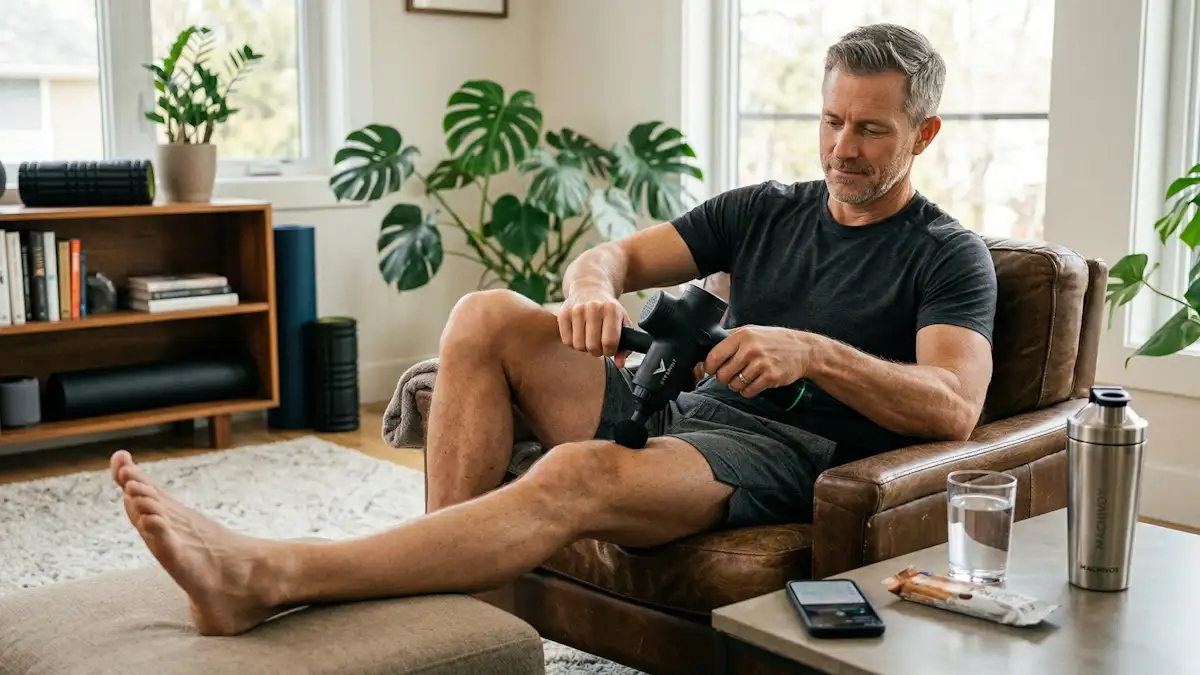
Picture this: Mike, a 45-year-old dad and weekend warrior, used to drag through his week after leg day. Sore muscles kept him sidelined for days. Then he added recovery tech and slashed his downtime in half. Now he crushes workouts back-to-back.
After 40, muscle repair slows because hormone levels drop, inflammation rises, and cells work less efficiently. Studies show it takes about 30% longer to bounce back. You feel it in longer soreness and stalled gains, even if you train smart.
That’s where recovery tech for fast muscle repair after 40 comes in. These simple tools speed healing, cut pain, and keep your progress steady. You’ll get practical tips and device recommendations on why recovery changes with age, percussive therapy devices for myofascial release, red light therapy for cellular recovery, pneumatic compression boots for lymphatic drainage, wearable biometrics for monitoring nervous system strain, plus how to build your routine.
First, let’s break down why your body shifts gears after 40.

Why Muscle Recovery Takes Longer After 40 and What Tech Fixes It
Your body handles workouts differently after 40. Muscles repair slower because key hormones like testosterone and growth hormone drop. This shift makes protein synthesis less effective, so damaged fibers take longer to rebuild.
Inflammation lingers too. Younger bodies clear it fast, but after 40, chronic low-level swelling delays healing. Blood flow to muscles decreases as well. That means less oxygen and nutrients reach sore spots.
Research backs this up. For example, a study on age-related muscle damage recovery shows older adults need more time to reduce soreness and restore strength. Another report lists four main culprits: hormone changes, poor sleep quality, rising inflammation, and satellite cell decline, which are vital for muscle growth.
You notice it in daily life. DOMS lasts days instead of hours. Gains stall despite consistent training. Yet, you can fight back with recovery tech for fast muscle repair after 40.
These tools target the root issues. Percussive therapy breaks up knots and boosts circulation. Red light therapy energizes cells at the mitochondrial level. Compression boots flush out waste through better lymphatic flow. Wearables track HRV to avoid overtraining.
Consider Mike from our story. He stacked these against his age-related slowdowns. Soreness faded quicker. He trained harder without burnout.
Most importantly, combine tech with basics like sleep and nutrition. Start small, track results, and adjust. Your body responds when you give it the right support.
Percussive Therapy Devices for Myofascial Release
Percussive therapy devices hit sore muscles with rapid pulses. They break up tight fascia, boost blood flow, and speed repair. After 40, this recovery tech for fast muscle repair after 40 shines because it targets stubborn knots without much effort. You feel looser faster, so you train again sooner. Devices like massage guns make myofascial release simple at home.
Comparison of Top-Tier Massage Guns for Deep Tissue Repair
Top models stand out in 2026 reviews for power and ease. Theragun Pro leads with deep reach. Hypervolt 2 offers quiet operation. Ekrin B37 delivers value without skimping on specs. Over-40 users love their light weight, low noise, and handles that fit aging hands.
Here’s a quick spec breakdown:
| Model | Amplitude | Speeds (PPM) | Battery Life | Price | Best for Over-40 Users |
|---|---|---|---|---|---|
| Theragun Pro | 16mm | 5 (1,750-2,400) | 300 minutes | $599 | App control, 6 attachments (calves, shoulders); ergonomic triangular grip |
| Hypervolt 2 | 12mm | 3 (1,800-3,200) | 180 minutes | $199 | Whisper-quiet (under 45dB), app integration; lightweight at 2.2 lbs |
| Ekrin B37 | 12mm | 5 (1,700-3,200) | 240 minutes | $229 | Quiet stall-free motor, 5 attachments; budget-friendly, easy grip |
Theragun Pro suits intense deep tissue work with its app-guided routines. Hypervolt 2 wins for apartments because it barely hums. Ekrin B37 balances it all, per comparisons from Review Phenom.
Quick tip: Start on low speed. Glide slowly over quads or back for 30 seconds per spot. Build up as you get comfortable.
Proven Protocols for Faster Results with Percussive Tech
Follow these steps for best results. They cut soreness and pair well with your routine.
- Warm up first. Walk or do light stretches for 5 minutes. This preps muscles and avoids injury.
- Target key areas. Hit quads for 2 minutes per leg. Move to back and shoulders next. Use a ball attachment for calves.
- Combine tools. Follow with a foam roller on the same spots. This doubles the release effect.
- Time it right. Use right after workouts or next morning. Shorter 10-minute sessions work best over 40, since recovery needs gentleness.
A study on percussive massage and DOMS showed up to 48% less soreness versus rest alone. Users report quicker mobility. Adjust pressure low at first. You notice less stiffness by day two. Stick consistent, and it becomes your go-to fix.
Red Light Therapy (Photobiomodulation) for Cellular Recovery
Red light therapy boosts your cells’ energy factories, the mitochondria. It speeds muscle repair by ramping up ATP production. After 40, this recovery tech for fast muscle repair after 40 fights the natural dip in cellular power. You get less soreness and quicker bounces back from tough sessions. Devices shine red and near-infrared light on sore spots. Results build over weeks, but many notice easier movement right away.
Benefits of 660nm and 850nm Wavelengths for Older Athletes
660nm light works on the surface. It targets skin and shallow muscles. This wavelength eases superficial inflammation and aids quick tissue repair.
850nm penetrates deeper. It reaches joints and bones. So, it helps with stubborn aches from heavy lifts.
Use both together for full coverage. Studies show this combo cuts inflammation by 35% in folks over 40. For example, research on photobiomodulation with resistance exercises for older adults highlights better muscle metrics and performance.
After 40, your cells produce less energy. These wavelengths counter that drop. They boost recovery where age slows you down.
Try sessions three times a week. Hold the device 6 to 12 inches from skin. Start with 10 minutes per area. Increase as you adapt. Skin feels warmer, but not hot. Consistency pays off most.
Top Panels and Handhelds to Start With
Pick portable options first. They fit busy schedules. Joovv Go 2.0, Mito Red, and Hooga lead for beginners.
Here’s how they stack up:
| Device | Size (inches) | Power (LEDs/Watts) | Price | Best For Over-40 Users |
|---|---|---|---|---|
| Joovv Go 2.0 | 6.75 x 2.75 | 60 LEDs / 25W | $300 | Travel-friendly; app timers for quads |
| Mito Red | 8 x 4 | 100 LEDs / 40W | $250 | Deeper penetration; lightweight at 2 lbs |
| Hooga | 7 x 3 | 80 LEDs / 30W | $150 | Budget pick; quiet fans, easy carry |
Joovv Go 2.0 shines for on-the-go use. Mito Red packs more power for joints. Hooga saves money without weak output.
Beginner protocol: Shine on legs post-workout for 5-10 minutes. Do arms or back next. Repeat three days weekly. Always wear eye protection; goggles block stray light.
Safety first. Keep skin clean and bare. Skip if you have active cancer. Track how soreness fades. You train harder with less downtime.
Pneumatic Compression Boots for Lymphatic Drainage
Pneumatic compression boots squeeze your legs in waves. They push fluid up and out, clearing waste from workouts. This recovery tech for fast muscle repair after 40 boosts lymphatic drainage so soreness fades fast. After 40, sluggish circulation makes legs feel heavy longer. These boots mimic a massage from below, flushing buildup. You stand taller and move easier the next day. Guys like Mike stack them with other tools for non-stop training.
How Dynamic Compression Reduces Post-Workout Leg Soreness
Dynamic compression works in steps. First, chambers inflate from your feet upward. This sequential squeeze acts like a pump. It moves blood and lymph back to your core. Next, the pressure releases, pulling fresh blood in. Lactic acid and swelling exit faster.
Studies confirm the gains. Athletes regained leg strength 40% faster than rest alone. For you over 40, it prevents varicose veins too. Boots improve vein flow, cutting bulge risks from standing or heavy lifts, as noted in compression therapy guides.
Use them evenings. Sit back after dinner. Run a 20-minute cycle on medium. Your legs lighten up overnight. Soreness drops, so you skip the hobble.
Best Boots and Usage Tips for Beginners
Top picks shine for home use. Normatec 3 offers 100-200mmHg pressure with app zones. Therabody RecoveryAir hits 200mmHg max, plus fast deflate. Air Relax stays portable at 3 lbs with basic app control.
Check this side-by-side:
| Model | Max Pressure | App Features | Portability | Price |
|---|---|---|---|---|
| Normatec 3 | 100-200mmHg | Custom zones, timers | Backpack case | $800+ |
| Therabody RecoveryAir | 50-200mmHg | Quick inflate/deflate | Lightweight unit | $700 |
| Air Relax | 0-220mmHg | Basic presets | Ultra-compact | $500 |
Start at 100mmHg. Beginners avoid overload. Do 3-4 sessions weekly, 15-30 minutes each. Pair post-run or lift. Hydrate before. You build tolerance quick.
Wearable Biometrics for Monitoring Nervous System Strain
Wearables track your nervous system’s stress load. They spot when strain builds from workouts or life. This recovery tech for fast muscle repair after 40 prevents overtraining. Your autonomic nervous system balances fight-or-flight with rest-and-digest modes. After 40, it recovers slower, so you risk burnout. Devices measure subtle shifts to guide rest. Mike from our story used them to train smart. He avoided crashes and repaired muscles faster. Now, let’s see how.
Using Heart Rate Variability (HRV) to Time Your Workouts
HRV gauges beat-to-beat changes in your heart rate. High HRV means you recovered well; your body handles stress. Low HRV signals fatigue, so rest instead. Morning readings work best because sleep affects them least.
Take it first thing. Sit calm for two minutes. Apps like Elite HRV or Oura simplify scores. Green means go hard. Yellow calls for easy days. Red demands off time.
Studies show gains. HRV-guided training boosts performance by about 15% in endurance athletes, per a meta-analysis on VO2max improvements. Cyclists and runners adapt loads better, so they progress without injury.
Over 40, poor sleep skews readings. Factor that in. Track trends over weeks, not single days. If HRV dips after late nights, add an extra rest day. You time workouts right. Muscles repair quicker because you avoid overload. Start today. Your next session feels stronger.
Must-Have Wearables and Metrics Beyond HRV
Oura Ring 4, Whoop 5.0, and Garmin watches lead for recovery. They track sleep quality, strain scores, resting heart rate (RHR), and readiness. Low RHR pairs with high HRV for green lights.
Oura Ring slips on easy. It nails sleep stages and daytime stress. Whoop bands measure strain from all activity. Garmin integrates GPS workouts with recovery advice.
Set thresholds. Aim for 80% readiness before lifts. Apps sync data, so you adjust on the fly.
Consider key metrics:
| Wearable | Top Metrics | Price Range | Over-40 Perk |
|---|---|---|---|
| Oura Ring 4 | HRV, sleep, RHR | $350+ | Discreet ring, top HRV accuracy |
| Whoop 5.0 | Strain, recovery, sleep | $30/month | 24/7 tracking, no screen |
| Garmin Venu | HRV status, training load | $450+ | Workout integration, long battery |
Garmin suits runners. Pair with your routine. Check morning scores, then train. You cut strain and speed repair.
Build Your Recovery Tech Routine for Lifelong Strength After 40
You have the tools now: percussive guns, red light panels, compression boots, and wearables. Stack them smartly for recovery tech for fast muscle repair after 40. This routine fights age-related slowdowns. It keeps muscles strong and joints happy for years. Start simple. Build habits that stick. Mike from our story did this. He trains three days straight now without crashing.
Focus on consistency first. Use tools post-workout and mornings. Pair with sleep and protein. Results compound over weeks. Your body adapts. Strength holds steady.
Sample Weekly Routine to Kickstart Fast Repair
Craft a plan around your lifts or runs. This beginner setup uses all four tools. Adjust for your schedule. Rest days still get light recovery.
Here’s a straightforward 7-day breakdown:
| Day | Workout Focus | Post-Workout Tech | Morning Add-On |
|---|---|---|---|
| Monday | Legs (squats) | Compression boots (20 min), percussive quads (5 min/leg) | Wearable HRV check |
| Tuesday | Upper body (push) | Red light chest/shoulders (10 min), percussive back | Light percussive warm-up |
| Wednesday | Cardio or active rest | Compression full legs (15 min) | Red light joints (5 min) |
| Thursday | Legs (deadlifts) | Percussive hammies (5 min/leg), red light calves | HRV-guided intensity |
| Friday | Upper (pull) | Red light arms (10 min), percussive traps | Compression quick cycle |
| Saturday | Full body or sport | All tools: 10 min each in sequence | Wearable recovery score |
| Sunday | Full rest | Optional light percussive or red light | Track weekly HRV trends |
Follow this table for four weeks. Sessions stay under 45 minutes total. Hydrate well. Eat 30g protein after. You notice less fatigue by week two. Soreness shrinks because tools clear waste fast.
Stack Tools in Sequence for Synergy
Layer your tech right. Order matters for best flow. Start with percussive to loosen knots. Follow with red light for cell boost. Add compression to flush fluids. Check wearables last.
For example, after legs: percussive first breaks fascia. Red light then energizes fibers. Boots squeeze out buildup. HRV confirms you’re ready next day.
Do this stack three times weekly. Keep each step short. Bodies over 40 love the gentle push. A Men’s Health recovery tech guide backs stacking for quicker gains. Inflammation drops. Blood flows better. You lift heavier sooner.
Pro tip: Time stacks evenings. Relax in a chair. Play podcasts. It turns recovery into chill time.
Signs You’re Winning and When to Tweak
Track wins beyond feel. HRV climbs. Soreness lasts under 48 hours. Strength logs rise weekly. Sleep deepens.
Log simple metrics. Note pre/post HRV. Rate soreness 1-10 daily. If HRV stalls, cut volume 20%. Add extra red light if joints ache.
Tweak monthly. Swap boots for percussive if travel hits. Scale up as fitness grows. Most guys over 40 see lifelong strength here. Mike doubled his routine time. You can too. Stay patient. Results build.
Conclusion
You now know how recovery tech for fast muscle repair after 40 turns slowdowns into strengths. Percussive therapy loosens knots fast. Red light boosts cells. Compression boots flush waste. Wearables guide smart rest. Mike slashed his downtime in half. You can too.
Stack these tools like the routine shows. Soreness fades quicker. Strength builds steady. Start simple because consistency wins. Pick one device this week. Grab that massage gun or Oura ring. Test it post-workout and track the difference.
Picture crushing sets into your 50s and 60s. These fixes keep you moving strong. What’s your favorite tool so far? Drop a comment below. Subscribe for more routines that stick.
⚠️ Safety Note:
While recovery technology can significantly enhance physical repair, these tools are not a substitute for professional medical advice or supervised physical therapy. Percussive therapy and compression boots should be used with caution if you have a history of blood clots (DVT), vascular disease, or severe osteoporosis. Similarly, red light therapy may not be suitable for individuals with certain skin conditions or active malignancies. Always consult your physician before using biometric data to push through intense physical strain, especially if you have an underlying cardiac condition. Use these devices as supplements to, not replacements for, fundamental recovery like sleep and proper hydration.
FAQ
Is cold plunge or sauna better for muscle repair after 40?
It depends on your goal. Sauna (Heat) is superior for overall cardiovascular health and GH (Growth Hormone) spikes, making it great for general longevity. Cold plunges are excellent for reducing immediate inflammation, but should be avoided immediately after strength training to allow natural muscle hypertrophy processes to occur.
Can red light therapy really heal muscles faster?
Yes. Photobiomodulation works by stimulating the mitochondria in muscle cells, increasing ATP production. For men over 40, this helps accelerate the repair of micro-tears and reduces oxidative stress in the tissues, leading to shorter recovery windows between training sessions.
How important is HRV tracking for men over 40?
Critical. After 40, the parasympathetic nervous system takes longer to bounce back. Monitoring Heart Rate Variability (HRV) through wearables allows you to see if your body has actually recovered or if you are at risk of overtraining, which can lead to injury and hormonal imbalances.

Machivox delivers research-informed men’s health insights designed to support strength, steady energy, balanced hormones, and long-term vitality. You’ll find clear, practical guidance on training, nutrition, performance, and mental resilience, so you can feel stronger, stay consistent, and show up at your best every day.
- Disclaimer: This information is for education only and doesn’t replace medical advice. Always talk with a qualified healthcare provider before you make health decisions. Please read our full Medical Disclaimer here.