



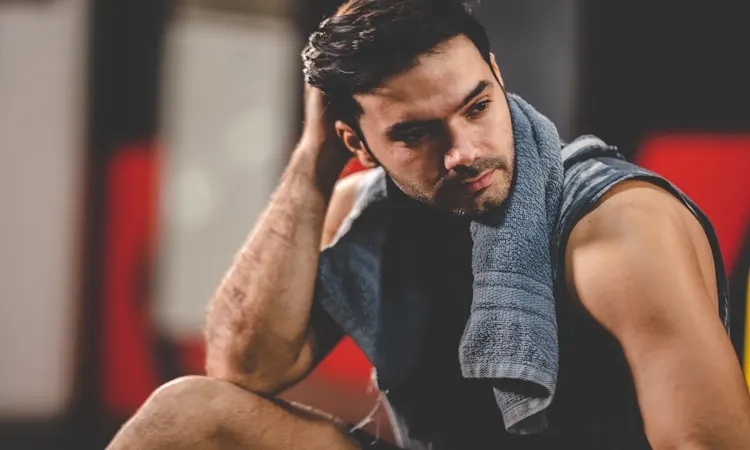
If sex starts to feel like a test, you’re not alone. Many men deal with performance anxiety, even with partners they trust and desire. It can show up as trouble getting or staying hard, finishing too fast, going numb, avoiding sex, or getting stuck in your head when you want to feel present.
The good news is that this isn’t a character flaw or a sign you’re “broken.” It’s often a stress response that can be changed with the right skills, practice, and support. This guide walks through practical, respectful steps you can use for dating, long-term relationships, and even solo sex, without hype or shame.
Quick note: this article is educational, not medical advice. If symptoms are persistent or sudden, or you’re worried about your health, professional help is available and worth using.
What performance anxiety is, and why it hits men so hard
Sexual performance anxiety is the pressure-laced thought, “What if I can’t?” followed by the body’s reaction, “We’re not safe.” That loop can start from one rough night, a partner’s comment, a stressful month, or even a random off day. Then the brain links sex with risk, and it tries to protect you by staying on alert.
Here’s the simple mind-body loop. First, you feel pressure to perform. Next, your mind scans for danger: Am I hard enough? Am I taking too long? Will they be disappointed? That worry triggers stress hormones and muscle tension. As a result, blood flow shifts away from the areas needed for erection, and pleasure can feel muted. The more you monitor your body, the less your body can do its job.
This is why anxiety and erectile dysfunction often travel together. Fear of “failing” can also lead to quick, tense thrusting, holding your breath, and a tight pelvic floor. All of that makes it harder to stay aroused, and it can change orgasm timing and sensation.
A few common triggers can light the fuse:
- A new partner, especially if you really like them
- A past experience that felt embarrassing or rejecting
- Porn comparisons (pace, size, constant firmness, nonstop desire)
- Body image worries, stress, or relationship tension
If you want a clear medical-style overview of how sexual performance anxiety works and why it’s common, see Cleveland Clinic’s guide on sexual performance anxiety. It can help normalize what’s happening while you build your own plan.
When sex becomes a scoreboard, your body hears “danger.” When sex becomes connection, your body can relax into arousal.
The stress response vs. arousal, why your body won’t cooperate when you’re scared
Think of your nervous system like a home alarm. When the alarm is on, the house locks down. You scan, brace, and prepare to act. That’s useful for real threats, but it’s the opposite of what arousal needs.
Erections usually work best in “safe mode,” where breathing is steady, muscles soften, and attention stays with pleasure. Anxiety flips you into “alarm mode.” Your jaw tightens, shoulders rise, and your pelvic floor can clench without you noticing. Even if attraction is strong, your body may choose protection over pleasure.
This same stress response can also affect orgasm. Some men climax fast because their body is rushing to “finish the task.” Others struggle to finish because they’re watching themselves from the outside. Desire can drop too, not because you don’t want your partner, but because your brain starts pairing sex with pressure.
Myth check: “If I’m attracted, it should work every time”
Attraction helps, but it doesn’t override sleep loss, heavy drinking, work stress, or conflict. Erections also change with age, routine, and mood. That’s normal biology, not a verdict.
A kinder baseline sounds like this: “My body has rhythms. Some nights will be better than others.” That mindset alone can lower pressure, which is a big part of performance anxiety relief.
Fast ways to calm your body before and during sex
You don’t need a perfect mindset to have better sex. You need a few reliable tools you can use quietly, even in the moment. The goal is not to “force an erection.” The goal is to lower the threat signal so arousal has space to show up.
Start by shrinking the stakes. If penetration feels like the only acceptable outcome, anxiety has power. If pleasure, touch, and connection count as success, your body can relax.
Also, plan for the spiral. Most men don’t notice anxiety building until it’s loud. Instead, look for early signs: shallow breathing, checking firmness, rushing foreplay, holding tension in your thighs or lower belly. When you spot those signs, treat them like a dashboard light, not a disaster.
Here are three tools you can try tonight. Use one, then build from there.
A 2 minute reset: breathing that lowers the panic signal
This is one of the most discreet breathing exercises for anxiety because nobody has to know you’re doing it.
- Inhale through your nose for 4 seconds.
- Exhale slowly for 6 seconds.
- Repeat for 10 rounds (about 2 minutes).
The longer exhale matters because it nudges your body toward relaxation mode. While you breathe, soften three areas: your jaw, shoulders, and pelvic floor (think “unclench,” not “push”).
Use it at three times:
- Before clothes come off
- During foreplay, especially if you feel rushed
- Right after you notice spiraling thoughts
If you want more examples of paced breathing and why it can reduce the stress response, Jazz Psychiatry explains several options in breathing exercises for performance anxiety.
A quick partner script, if you want to name it without making it heavy: “Give me a second, I want to slow down and really feel this.”
Switch from “performance” to “sensation” with a focus plan
Anxiety pulls you into measurement. Sensation pulls you back into your body. You can guide attention without trying to “empty your mind.”
Try this simple focus plan:
- Notice 3 things you feel (warmth, skin, pressure, wetness, breath).
- Notice 2 things you hear or smell (breathing, sheets, perfume, the shower).
- Name 1 thing you want next (slower kissing, more lube, hands on your chest).
That last step matters. Anxiety makes you passive and watchful. Asking for what you want makes you present.
A few sexual mindfulness techniques that help in real life:
- Slow down on purpose for 20 to 30 seconds
- Keep your breathing audible and steady
- Try brief eye contact if it feels safe, then return to touch
- Stay curious: “What feels good right now?” instead of “Am I working?”
For a mainstream, easy-to-read take on how mindfulness can reduce sex anxiety, CNN has a helpful piece on mindfulness for performance anxiety.
A partner script that keeps the mood: “I’m into you. I want to take my time and not rush.”
Take the pressure off: low stakes sex menus that rebuild confidence
If every sexual moment has to end in penetration, your nervous system learns that sex equals pass or fail. A “sex menu” gives you options, which lowers fear and builds confidence in bed over time.
Before things heat up (or even earlier in the day), agree that you can choose from a menu. That way, changing plans won’t feel like rejection.
Here are options that still count as real sex, even if penetration doesn’t happen:
- Making out and grinding with clothes on
- Mutual touch with hands (with lube if you want it)
- Oral sex (giving, receiving, or both)
- Massage with a clear “no pressure to finish” agreement
- Showering together, slow and playful
- Using a toy for your partner, or for you, if that appeals
The key is the agreement: “Not penetration tonight” can be a win, not a consolation prize. Many couples find that erections often show up more easily when they’re not required.
If you want a simple line that protects confidence while staying honest: “I’m really turned on. Let’s keep going, just without making it a goal.”
Longer term fixes that make performance anxiety shrink for good
Quick tools help in the moment, but lasting change comes from how you train your nervous system over weeks. Think of it like rebuilding trust with your body. Each low-pressure experience becomes proof that intimacy is safe again.
Start with the basics, because they affect arousal more than most people want to admit:
- Sleep: Short sleep raises stress and lowers desire.
- Alcohol: A drink can relax you, but more often dulls sensation and makes erections less reliable.
- Fitness and movement: You don’t need a perfect body, but regular movement supports mood, circulation, and confidence.
- Porn and expectations: If porn sets your “normal,” real sex can feel slow, imperfect, or risky. Taking a break, changing what you watch, or focusing on audio or fantasy can reduce comparison pressure without shame.
Communication also matters. If you’re hiding anxiety, your partner may sense distance and fill in the blanks. If you name it calmly, you turn a private fear into a shared problem, and that usually lowers pressure.
Sex therapy for men is also a normal option. It’s skill-building, not a lecture. A good therapist helps you practice new responses to the exact thoughts and sensations that trigger the spiral.
Rewrite the story: from “I have to prove myself” to “we’re exploring together”
Performance anxiety often runs on a rigid story: “My job is to deliver.” Try these reframes instead, and repeat them when you feel pressure rise:
- From outcome to process: “My goal is pleasure and connection, not a perfect erection.”
- From mind reading to teamwork: “I don’t have to guess. I can ask what feels good.”
- From single moment to trend: “One night is data, not destiny.”
A journaling prompt that helps after sex (good, bad, or in between):
“What did I do that supported safety and pleasure, even in a small way?”
Track progress with measures that actually predict change: less dread before sex, more laughter or ease, more moments of feeling present, and more willingness to initiate. Erection quality often improves as a side effect.
When to talk to a doctor or therapist, and what help can look like
Sometimes anxiety is the main driver. Other times, there’s a medical piece too. Many men have both, and that’s still workable.
Consider getting support if you notice:
- Ongoing anxiety and erectile dysfunction that lasts several weeks
- Pain, curvature, or pelvic discomfort
- A sudden change that doesn’t match your usual pattern
- Morning erections disappearing often
- Depression, high stress, or panic symptoms
- Medication side effects (including some antidepressants)
- Relationship distress that keeps escalating
A checkup might include a review of medications, blood pressure, labs (like blood sugar or testosterone when appropriate), and heart risk factors. For a clear overview of how clinicians approach evaluation and treatment options, Mayo Clinic explains ED diagnosis and treatment in plain language.
Therapy can help you break the loop with practical tools (thought work, exposure to anxiety in small steps, communication skills, and guided exercises like sensate focus). In some cases, meds like PDE5 inhibitors can help some men rebuild confidence, but talk with a clinician first, especially if you take nitrates or have heart concerns.
Conclusion
Performance anxiety doesn’t mean you’re not attracted, not man enough, or not capable. It usually means your body is responding to pressure like it was built to do. The fastest path forward is to lower the alarm signal, then give yourself permission to enjoy what’s already working.
Start with the quick wins: the 4-in, 6-out breathing reset, a sensation focus plan, and a lower-stakes sex menu that keeps pleasure on the table. Over time, support your body with sleep, less alcohol, movement, and honest communication. If you’re stuck, sex therapy and medical care can make a big difference.
Start with one small step today, even if it’s a two-minute breathing break for sexual wellness. Then, if the symptoms keep coming back, book a checkup so you can get the right support.

Machivox delivers research-informed men’s health insights designed to support strength, steady energy, balanced hormones, and long-term vitality. You’ll find clear, practical guidance on training, nutrition, performance, and mental resilience, so you can feel stronger, stay consistent, and show up at your best every day.
- Disclaimer: This information is for education only and doesn’t replace medical advice. Always talk with a qualified healthcare provider before you make health decisions. Please read our full Medical Disclaimer here.