


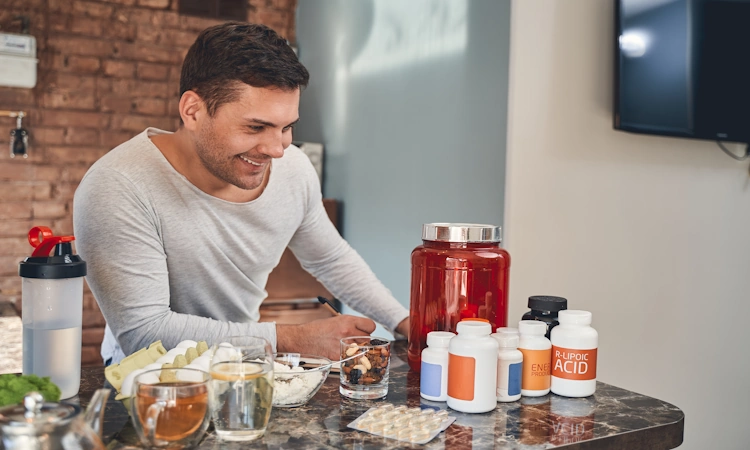
If “male vitality” feels low, you’re not imagining it. Most guys mean a mix of energy, libido, erections, mood, and drive in the gym. When any one of those slips, it can feel like your whole system is off.
Male vitality supplements can help in some cases, especially when stress is high, sleep is poor, or a nutrient level is low. Still, they’re not magic. The best results usually come when a supplement supports a foundation that’s already solid.
This guide keeps it simple. You’ll learn how to judge evidence, which ingredients have the best support, how to spot underdosed labels, and how to stay safe. You’ll also get a no-drama 30-day plan so you can test what works for you without buying a 14-ingredient “kitchen sink” blend.
Start with what moves the needle most: sleep, stress, fitness, and basics
A supplement is like adding premium fuel to a car with a weak battery. It might help a little, but it won’t fix the main problem. For energy, libido, and erection quality, the biggest drivers are often boring basics: sleep, stress load, fitness, and cardiometabolic health.
Sleep matters because it sets the tone for hormones, appetite, recovery, and mood. Stress matters because it can shut down desire and make performance unreliable. Movement matters because blood flow and conditioning affect erections and stamina. Even mild weight gain can change how you feel day to day.
Also, keep expectations realistic. Many “vitality” complaints are really “too much life at once” complaints. Long work hours, late nights, heavy training, and a couple drinks to unwind can add up fast.
Before buying a big stack, it’s smart to consider basic health checks and obvious friction points. That doesn’t mean anything is “in your head.” It means you want to remove the simple obstacles first, so any supplement trial has a fair shot.
Quick self-check: low sleep, high stress, alcohol, and porn habits can look like “low vitality”
If you’re trying to decode what’s going on, start with patterns you can actually change. Many guys notice low vitality when these show up:
- Short sleep most nights (or a shifting bedtime): you may feel flat, irritable, and less interested in sex.
- High stress with no downshift: desire can drop, and erections can be less consistent.
- Binge drinking on weekends: libido can tank for a day or two, plus sleep quality suffers.
- Porn and constant novelty: for some people, it can change arousal cues and make real-life stimulation feel “less strong.”
First steps don’t need to be perfect. Pick one or two for two weeks:
Set a consistent bedtime, even on weekends. Get morning light for 5 to 10 minutes. Cut screens 30 minutes earlier. Add a 10 to 20-minute walk most days. If you drink, cap it and avoid “catch-up” nights.
Those changes won’t solve every case. Still, they often improve the baseline more than any capsule.
Labs and meds worth discussing with a clinician before buying a big stack
Some issues can mimic low vitality, and supplements won’t fix them. If symptoms persist, talk with a clinician about screening that fits your situation. Common topics include testosterone (measured properly, usually in the morning, and repeated if low), thyroid function, anemia, diabetes risk, depression, and sleep apnea.
Medication side effects are also common. SSRIs, some blood pressure meds, and finasteride can affect libido or erections in some men. Don’t change a prescription on your own, but do bring it up. A clinician can adjust dose, timing, or consider alternatives.
If erection quality changes suddenly, treat it as a health signal, not just a bedroom issue. Blood pressure and cardiovascular health matter here. If you want an example of how specific supplement claims are studied in humans (instead of marketing talk), you can look at a longer clinical trial design like this Eurycoma longifolia trial on erectile function and testosterone.
Evidence-based ingredients that may help (and what results to expect)
When people shop for male vitality supplements, they often chase “testosterone boosters.” In real life, many supplements work through simpler paths: stress reduction, better sleep, and improved blood flow.
That’s good news because those paths are tied to how you feel day to day. It also keeps expectations honest. If you’re hoping for prescription-level results from an herb, you’ll probably be disappointed. If you’re looking for mild to moderate support, a few ingredients have decent human data.
Below are the best-supported options for common goals, plus typical studied dosing ranges. Product forms vary, so always check the label.
For erections and blood flow: L-citrulline (and when it beats L-arginine)
Think of an erection like a hydraulic system. You need signals from the brain, relaxed smooth muscle, and enough blood flow to fill the tissue. Nitric oxide helps with that “relax and fill” part, which is why many erection-support supplements focus on nitric oxide pathways.
L-citrulline is an amino acid that your body converts into L-arginine, which then supports nitric oxide production. Many people tolerate citrulline better than L-arginine, and it can raise arginine levels more reliably for some men.
In studies on mild erectile dysfunction, typical dosing is often in the range of 1.5 to 3 grams per day, sometimes split. A fair trial is 2 to 4 weeks, since the effect tends to be subtle and steady rather than instant. If it helps, many guys describe better firmness and easier “repeats,” not a dramatic transformation.
For context, this is an example of the research base: L-citrulline supplementation and erection hardness study.
Safety notes: If you already run low blood pressure, be cautious. Also talk to a clinician before combining it with nitrates or stacking it with PDE5 meds (like sildenafil), since blood pressure effects can add up.
For libido and stress: ashwagandha, plus what the clinical studies really show
If stress is the main thief of vitality, ashwagandha is worth considering. It’s typically used for perceived stress and sleep quality, and some clinical studies in men also track sexual well-being.
The best way to think about it is “less wired, more steady.” When stress drops, libido and performance can improve as a side effect. It may fit best if you feel tired but restless, or if you notice libido falling during high-pressure weeks.
Many studies use a standardized root extract, often around 300 mg twice daily (although formulas vary). Give it 8 weeks if you want a fair read, since stress and sleep changes can take time.
If you want to see what a controlled trial looks like, here’s a full-text example: ashwagandha trial on well-being and sexual performance.
Safety notes: Some people get stomach upset or feel sleepy. Use caution if you have thyroid issues or autoimmune conditions. If you’re trying to conceive, ask your clinician first, since goals and risk tolerance can differ.
For energy and performance: Panax ginseng benefits (and how to spot a quality extract)
Panax ginseng is often marketed for “male vitality,” but it’s better viewed as a fatigue and stamina supplement. In other words, it may help you feel more capable, which can support mood, workouts, and sex drive indirectly.
Quality matters because ginseng products vary a lot. Look for a standardized extract (often listed with ginsenosides) rather than an unlabeled “ginseng powder” with no details.
Typical dosing in studies depends on the form, but common ranges include 200 to 400 mg per day of standardized extract, or higher gram amounts if it’s root powder. Trial it for 4 to 8 weeks.
For a high-level view of evidence in erectile dysfunction, this review is a helpful starting point: Cochrane review on ginseng for erectile dysfunction.
Safety notes: Some people feel jittery or have sleep disruption, especially if they also use caffeine. It can also interact with blood thinners, so get medical guidance if that applies to you.
For low levels only: vitamin D, zinc, and magnesium are not “boosters” if you are already fine
Correcting a deficiency can change how you feel. Taking extra when you’re already sufficient usually doesn’t. That’s the main misunderstanding behind a lot of male vitality supplements.
Vitamin D is a good example. If you’re low, repleting it can support general health, and some research explores links with testosterone levels. Testing is often smarter than guessing, especially in winter or if you get little sun. Here’s a research overview to put that relationship in context: systematic review on vitamin D deficiency and testosterone.
Zinc is similar. Low zinc intake can affect reproductive health, but high-dose zinc long term can create problems, including lowering copper. Magnesium may help sleep and muscle function, and that can support energy, but it’s not a shortcut to “high testosterone.”
Practical rule: stay near label dosing unless a clinician recommends otherwise. If a product pushes megadoses, it’s a yellow flag, not a bonus.
How to choose a male vitality supplement that is not underdosed or overhyped
The supplement aisle is full of products that sound perfect and do almost nothing. Most disappointments come from two issues: doses that are too small to matter and blends that hide the real amounts.
A good product makes it easy to compare the label to clinical studies. It also helps you control variables. If you take seven new ingredients at once and feel different, you won’t know what caused it.
Keep your goal narrow. “Better erections” is different from “less stress” which is different from “more workout energy.” Matching the ingredient to the goal is half the win.
Label reading made simple: dosage, standardization, and avoiding “pixie dust” blends
“Proprietary blend” usually means the label lists ingredients but hides the amount of each one. That makes it impossible to know if you’re getting a studied dose or a sprinkle.
Standardization is your other clue. It means the product is made to contain a consistent amount of active compounds, not just ground-up plant. For example, a label might list a root extract with a certain percent of key compounds.
If you want the simplest approach, choose single-ingredient products first. If you prefer a blend, pick one with transparent amounts for every ingredient.
If you can’t match the label dose to human studies, you’re mostly buying a story.
Quality and safety checks: third-party testing, risky combos, and stimulant red flags
Quality varies more than most people expect. Look for third-party testing marks (such as USP, NSF, or Informed Choice programs) when possible, especially if you compete in sports or you’re sensitive to stimulants.
Be extra cautious with products that promise fast, dramatic results. “Instant” erection support blends sometimes rely on stimulants or harsh ingredients that spike anxiety.
Also watch for risky combos: multiple stimulants in one scoop, very high niacin that causes intense flushing, or yohimbine if you’re anxiety-prone. Many “energy” blends include lots of ingredients at tiny doses, which looks impressive but doesn’t move the needle.
What to skip, what to try first, and a simple 30-day plan
Most men don’t need more supplements. They need fewer, chosen better.
If you’ve been tempted by a massive testosterone stack, start smaller. Pick one goal, choose one ingredient with decent evidence, and measure change. That approach saves money and avoids side effects.
You should also know when supplements aren’t the right move. If you have chest pain with sex, sudden severe ED, fainting, black stools, or severe mood changes, stop experimenting and get care.
Common ingredients with weak or mixed evidence: tribulus efficacy, horny goat weed, “test boosters”
Tribulus is everywhere, and tribulus efficacy is often oversold. Some studies suggest it may help libido in some men, but it does not reliably raise testosterone in healthy men, and results vary across trials and products. If you want a research snapshot, here’s a recent summary: systematic review of tribulus supplementation in men.
Horny goat weed gets a lot of attention too, but human data is limited, and dosing and quality are inconsistent. Many “test boosters” rely on kitchen-sink formulas that use tiny amounts of trendy ingredients.
That doesn’t mean every non-listed herb is useless. It means the odds of a meaningful result drop when evidence and dosing are unclear.
A practical starter stack (or single pick) with clear goals and tracking
Start with one target and one supplement. Think of it like running a simple experiment, not chasing a vibe.
Here’s a quick way to choose:
| Primary goal | First pick to trial | Typical studied range | Trial length |
|---|---|---|---|
| Better erections (mild ED) | L-citrulline | 1.5 to 3 g/day | 2 to 4 weeks |
| Lower stress, improve libido | Ashwagandha extract | often 600 mg/day split | 8 weeks |
| Less fatigue, better stamina | Panax ginseng extract | 200 to 400 mg/day | 4 to 8 weeks |
| Fix a deficiency pattern | Vitamin D, magnesium, or zinc | per label, ideally guided by labs | 8 to 12 weeks |
Track a few signals twice a week: sleep hours, morning erections, desire, gym energy, and any side effects. Keep everything else as stable as you can.
Don’t combine supplements with nitrates, blood pressure meds, SSRIs changes, or PDE5 drugs without clinician advice. If anxiety spikes, sleep gets worse, or you feel lightheaded, stop and reassess.
The fastest path is usually the simplest one: one goal, one product, one month of tracking.
Conclusion
Male vitality supplements work best when they support the basics, not when they try to replace them. Sleep, stress, movement, and health checks often create the biggest jump in energy and performance. After that, a few ingredients have decent support, especially L-citrulline for blood flow, ashwagandha for stress-linked libido, and Panax ginseng for fatigue. Label transparency matters because underdosed blends are common. Above all, safety comes first, especially if you take medications or have heart risk. First, stick with one change you can maintain, then test one supplement for male vitality instead of buying a huge stack.

Machivox delivers research-informed men’s health insights designed to support strength, steady energy, balanced hormones, and long-term vitality. You’ll find clear, practical guidance on training, nutrition, performance, and mental resilience, so you can feel stronger, stay consistent, and show up at your best every day.
- Disclaimer: This information is for education only and doesn’t replace medical advice. Always talk with a qualified healthcare provider before you make health decisions. Please read our full Medical Disclaimer here.